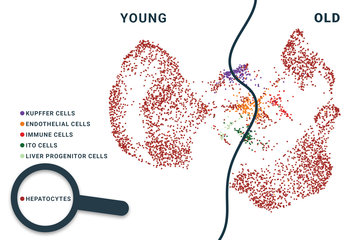
Source of life
Eugene W. Myers never attended a biology course. But despite this fact, he has made a career for himself in this field, and in developing a computer program, made a major contribution to decoding the human genome. The bioinformatician is Director at the the Max Planck Institute for Molecular Cell Biology and Genetics and the Systems Biology Center in Dresden.
Text: Elke Maier


Deep in concentration, Eugene W. Myers sits in front of the screen, his glasses on his forehead. He has one e-mail to send before turning his full attention to his visitor. His austere office is on the second floor of the Max Planck Institute for Molecular Cell Biology and Genetics. The new Center for Systems Biology, to which Eugene – “Gene” – W. Myers was appointed as Director recentely, was established by the Max Planck Society jointly with the Klaus Tschira Foundation and the Max Planck Foundation. It is a joint project run by the Dresden-based Max PIanck Institutes for Molecular Cell Biology and Genetics, and Physics of Complex Systems. Its function is to develop methods to improve our understanding of the complex molecular orchestration that takes place in animate nature.
Wearing jeans, a white shirt and a black jacket, with graying, wavy hair and dark eyes, Gene Myers looks somewhat like Hollywood actor Richard Gere. Gene Myers too is famous – not on screen, but in bioinformatics, a discipline in which he is a pioneer. He made a decisive advance in decoding the human genome circa 2001 and the BLAST software that he co-developed in 1990 is used by researchers the world over to compare DNA sequences. Already he has received numerous awards, among them the Max Planck Research Prize in 2004 and a nomination as the most influential bioinformatician by Genome Technology magazine.
From the sequence analysis to microscopy
Gene Myers is a passionate coffee drinker. Consequently, he suggests that we move to the cafeteria in the lobby of the Institute, where he gets himself a cappuccino and settles himself at one of the metal bistro tables. His speech is punctuated now and again with German expressions that he emphasizes with vigorous gesturing, particularly when something excites him. Which happens often – especially when he explains how, after years of sequence analysis, he came upon microscopy.
“It was in 2003 when I visited the Max Planck Institute,” he explains, sipping his cappuccino. “Tony Hyman showed me some video recordings of a cell dividing. I could see exactly how the spindle apparatus was formed and how the chromosome halves were divided equally between the two daughter cells. I was fascinated,” he says, enthusiastically. "You could see the tubular spindle proteins grow, each individual microtubule. I had no idea until then what you could see with a microscope!”
It has only recently been possible to record such images. “It’s only about ten years since we were first able to make any desired protein visible with the aid of transgenically-encoded fluorescent dyes,” Myers explains. In this way, scientists can now watch what happens in a living cell ‘live’ through the microscope.
For Gene Myers, who at the time was working at the University of California in Berkeley, the film shot by the researchers in Dresden was a crucial experience. Until then, he had mainly been concerned with the alphabetic code of the genome, developing computer programs to compare genetic sequences. Since then his focus has shifted to what is written in this code. “I want to know how genetics produce the diverse forms that life takes. For example, how do genes determine how the brain of the Drosophila fruit fly is wired and functions?”
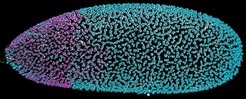
The fruit fly’s brain is barely more than a third of a millimeter in size. Yet it consists of 100,000 nerve cells. It takes enormous effort and expense to investigate such tiny structures – special high-resolution microscopes and sophisticated algorithms to transfer innumerable individual images into a three-dimensional image.

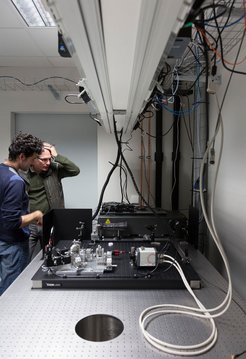
For example, it took two years for Gene Myers and his then colleagues at the Howard Hughes Medical Institute in the USA to develop a multi-photon microscope that enabled them to make a complete scan of the brain of a mouse. “A task that had previously taken a year-and-a-half could now be done in six days – and the images were much sharper,” says Myers.
With this experience behind him, he is now aiming to develop two high-resolution microscopes in parallel at the Institute in Dresden: one to reveal the processes in the interior of cells; the other to investigate groups of cells. “We will then, for instance, be able to follow exactly what happens in the Drosophila embryo,” he explains. “How do cells communicate with one another? How do they collaborate to produce a fly?”
Understanding the organism as a whole
It is this interdisciplinary research approach to understanding the organism as a whole that he appreciates at the Dresden-based institute. “That and the fact that the Max Planck Society also allows its scientists the freedom to try new things and take risks.” Ultimately, however, it was not just the research environment that attracted him to Germany. “Dresden is beautiful, and my wife and I enjoy the culture and the way of life.”
Long walks along the banks of the Elbe with his Border Collie crossbreed are as much part of the lifestyle for him as the daily commute to the Institute by bicycle. Important, too, are the friendships that have developed with his fellow scientists in Dresden.
The term friendship crops up regularly in the course of our conversation – the legacy, perhaps of a childhood on the move. Born in Boise, Idaho, he soon found himself travelling far and wide. His father was an employee of oil giant Exxon and worked in various countries in Asia. The family – his mother, who was French by birth, an older sister and younger brother – always accompanied him.
Describing an adventurous childhood spent in Pakistan, India, Indonesia, Hong Kong and Japan, he says, “I celebrated my first birthday onboard ship on the way to Karachi, and my brother was born in India. We never stayed longer than two or three years in one place. It was hard to keep leaving friends behind.” On the other hand, he acquired insights into various cultures and ways of life, and learned to adapt to new circumstances.
The family’s middle child began at a very early age to show a marked predilection for figures. Barely had he learned to count at the age of four, than he started to write down all the numbers from 1 to 1000. However, little Gene’s talent at first went unrecognized. “According to my school reports, I had a gift for art. There’s no mention of mathematics.”
Mathematics was his favorite subject, but he also developed a broad interest in the sciences. “I read all sorts of things, like the biochemist and science fiction author Isaac Asimov,” he recalls as he stirs his second cappuccino. Gray’s Anatomy, the standard work in anatomy, also made a huge impression on him. At twelve, he knew that he wanted to be a researcher.
Skipped two semesters as a mathematics student
Towards the end of his time at high school, the family returned to the US. Gene Myers enrolled to study mathematics at the renowned California Institute of Technology and promptly skipped the first two semesters. As his second subject, he chose electrical engineering. However, there was one certificate that to this day is still outstanding: “I was supposed to take a course in rhetoric, but I was too shy to speak in public,” he explains with a grin. “And anyway, I thought that later on, as a scientist, I wouldn’t need it.” A mistake, as he now knows. But even without a course in rhetoric, he nowadays has no trouble fascinating people with his ideas.

Gene Myers first came into contact with bioinformatics in 1979 while studying for his doctorate under Andrzej Ehrenfeucht at the University of Colorado. “In those days, it didn’t have a name. The subject was still in its infancy,” says Myers. He himself was soon to go a long way towards changing all that.
In 1985 – Gene Myers was by this time an assistant professor at the University of Arizona – he was developing a program to compare text files, when a colleague came up with the idea that something similar could be suitable for the alphabetic code of DNA. This fascinating problem began his journey into computational biology. But the reason for working on a biological subject was not solely scientific by nature: “Unlike the informaticians, the biologists always had something to party about,” he says with a mischievous smile. “We had a lot of fun!”
He began to work closely with Webb Miller at Penn State University and David Lipman who was the director of the then new National Center for Biotechnology Information. Together their close cooperation laid the foundation for the software program BLAST. Since it was first published in 1990, the program – which is freely available on the Internet – has been cited around 40,000 times, making it one of the most frequently cited scientific works. BLAST has even made its way into the language of the laboratory: when biologists are comparing DNA sequences by computer, the term they use is “blasting.”
It was via DNA analysis that Gene Myers finally came upon the most exciting project of his scientific career: sequencing the human genome. The size alone – 3.2 billion base pairs – presented researchers with a huge challenge, as long strings of DNA cannot be decoded in one piece. Generally, the sequence becomes too imprecise after around 800 bases, or breaks off. Scientists are therefore compelled to work their way forward step by step.
The task: a puzzle with 50 million pieces
The quickest way is called shotgun sequencing, in which the DNA is duplicated and then – as in a shotgun blast – fragmented into small snippets. These are then sequenced before being reassembled by computer. As with a jigsaw puzzle, the more pieces there are, the more difficult the task becomes. The human genetic puzzle has around 50 million pieces.
“When we proposed to shotgun-sequence the human genome, most people thought it was a crazy idea,” Gene Myers recalls. Two thousand snippets of DNA was considered to be the upper limit; any more would exceed the computer’s capacity. An article outlining the procedure was accordingly turned down by the principal journals Nature and Science. The Genome Research journal was willing to publish it, but only on condition that a critique of their article appeared alongside it.
One of those who believed in the shotgun procedure from the very beginning was Craig Venter. He offered Gene Myers a job with his newly-established company Celera when it was formed in 1998, which was working on sequencing the human genetic profile in parallel with the publicly funded Human Genome Project. Myers now had to prove that his method worked not just in computer simulations, but in reality. “That was the most stressful time of my life, but also the most exciting,” he remembers.

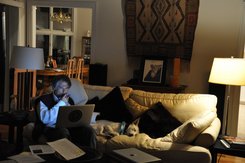
With many several hundred millions of dollars at stake, the pressure to succeed was huge. Gene Myers worked like a man possessed, writing endless lines of computer code. And in the end he persevered. Thanks to his program and the shotgun method, the sequencing was completed years ahead of the target date and at only one-tenth of the scheduled cost. Now at last, even the most rigid skeptics were silenced.
Gene Myers is now in the process of setting up a new Research Group in Dresden: four post-docs and a doctoral student are already working with him, and there is room for more. On the other hand, he has no wish to expand too far. It’s important to him to remain involved in the work being done by every individual. “Twelve would be the right size,” he muses.
Writing program code with a passion
He cannot imagine leading his team from behind a desk. He’s too much a man of action, too hands-on. Despite his many tasks, he stills does his own programming as often as possible: first thing in the morning with the obligatory cappuccino in hand, and occasionally at night or on a plane. “I just love writing program codes!”
This article was amended on May 22, 2017.